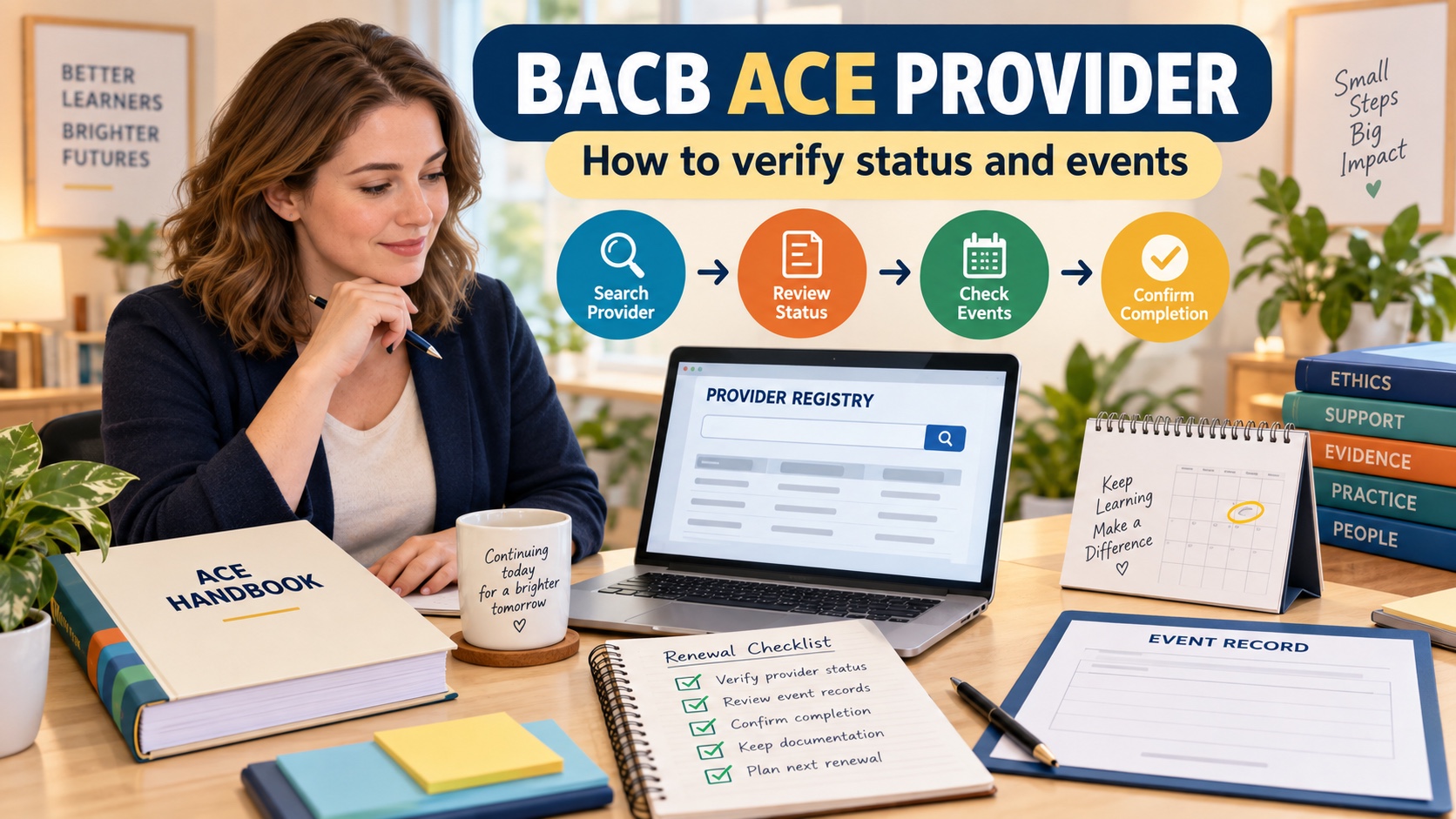
BACB ACE Provider: What the Status Means and How to Verify It
If you are looking for a BACB ACE Provider, you may be trying to confirm whether a person or organization can offer continuing education to BCBA or BCaBA certificants, or professional development to RBT certificants. The BACB’s Authorized Continuing Education (ACE) program is the relevant framework, and the BACB maintains a public verification registry.
The important distinction is easy to miss: ACE Provider authorization is not the same as BACB endorsement of every course or event. You should verify the provider, then review the specific event, audience, documentation, and current maintenance rules that apply to you. This guide explains that process without presenting ABA Study Online as an ACE Provider or CE/PD issuer.
Table of Contents
What is a BACB ACE Provider?
ACE stands for Authorized Continuing Education. The BACB authorizes ACE Providers to make certain professional learning opportunities available to BACB certificants. The official BACB description separates the audiences:
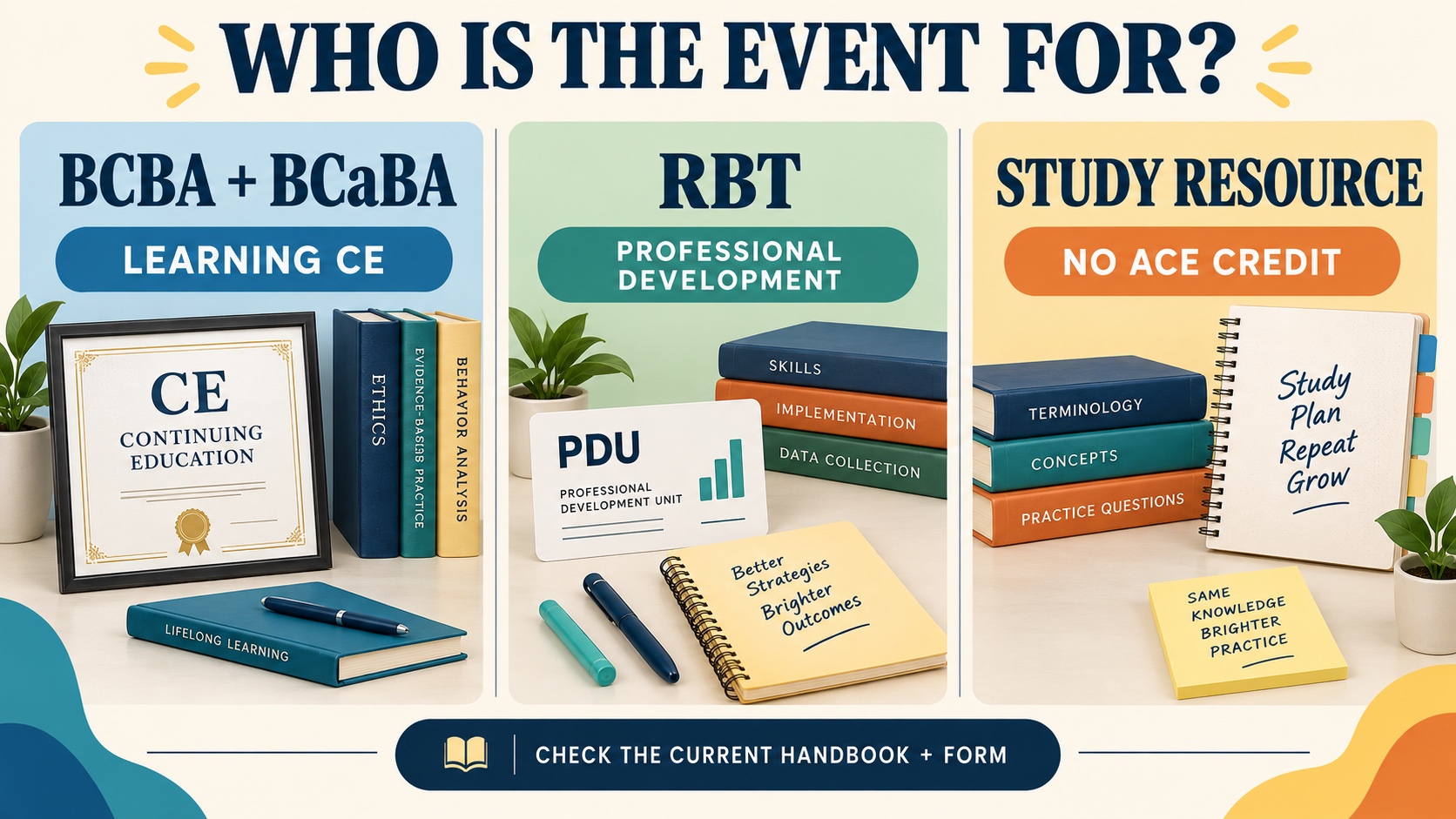
- BCBA and BCaBA certificants: an ACE Provider may offer Learning continuing education events that meet the applicable requirements.
- RBT certificants: an ACE Provider may offer professional development events that meet the applicable RBT requirements.
Provider status belongs to the individual or organization authorized by the BACB. It does not mean every speaker, partner, product, exam-prep page, or free download connected with that provider automatically carries ACE credit. Ask what entity is the provider of record and what document you will receive for the exact event.
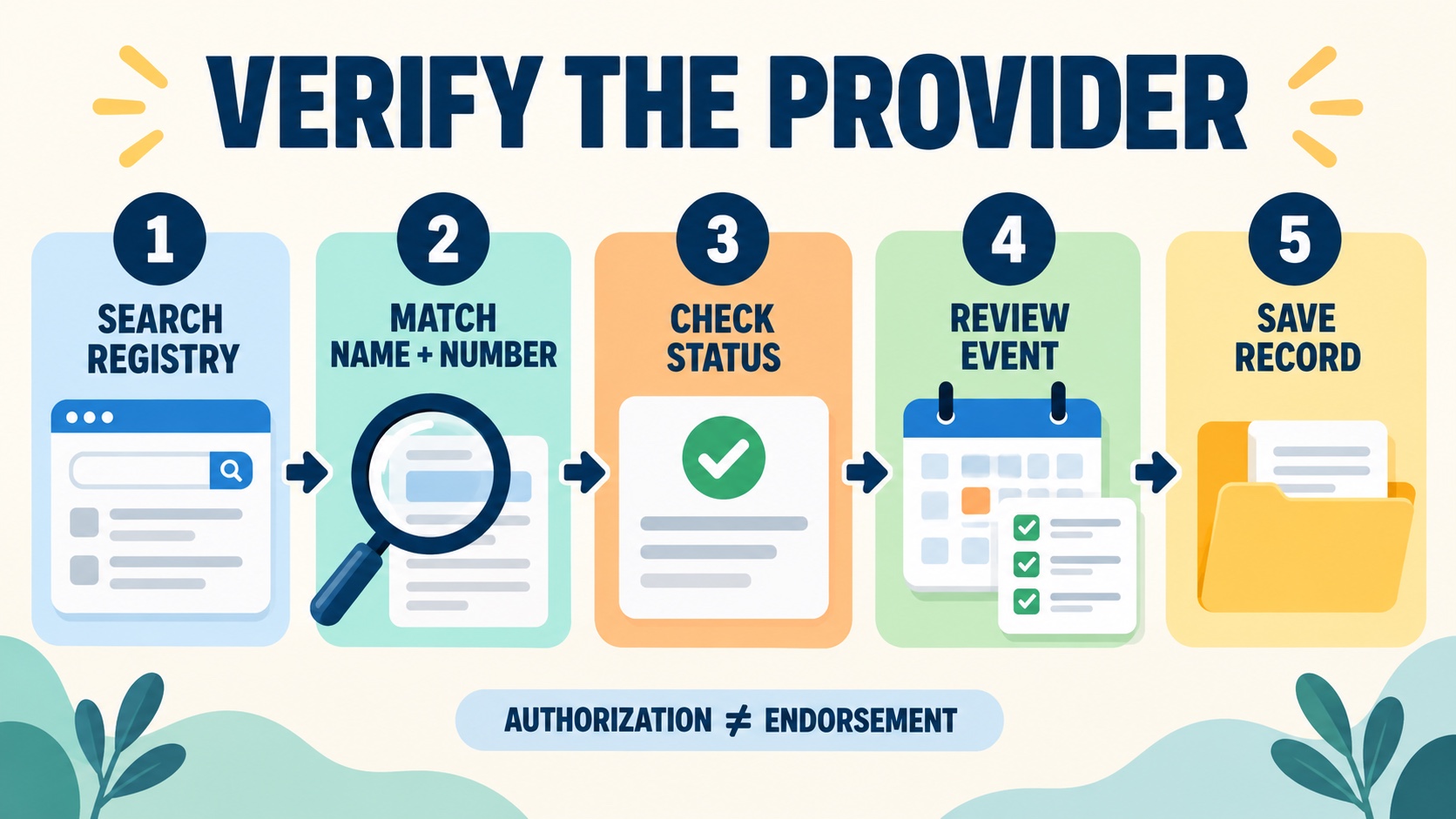
What ACE authorization does—and does not—mean
The BACB’s verification registry includes an important boundary: authorization as an ACE Provider does not imply BACB endorsement or approval of the CEU content. That means “ACE Provider” is a status to verify, not a guarantee that a particular course is the best fit for your practice, renewal cycle, role, or learning goal.
ACE authorization also does not change a certificant’s responsibilities. You still need to check your current BCBA, BCaBA, or RBT requirements, use the correct category or form, retain documentation, and enter or report the activity through the process that applies to your credential. A provider’s marketing page may be helpful, but it cannot replace the current BACB handbook or your portal record.
For ABA Study Online, the boundary is especially important: study articles, practice questions, flashcards, mock-exam previews, teaching tools, and app learning activities are educational products or resources. They are not presented here as BACB ACE events, CEUs, or RBT PDUs.
The same distinction applies to exam-preparation companies, universities, employers, conferences, and independent instructors. An organization may offer excellent study or professional learning without being an ACE Provider, while an ACE Provider may offer events that are not relevant to your particular exam, practice area, or renewal category. Verify the status and the event instead of using the label as a shortcut for quality or fit.
How to verify an ACE Provider
Use the BACB ACE Provider Verification Registry as your starting point. A provider’s own badge, certificate preview, social post, or search-result snippet is not enough when the status affects your professional record.
- Search the registry. Search by the individual or organization name. If the provider gives you a provider number, search that number as well.
- Match the identity. Check that the registry name, website, and provider number match the entity named in the event information and certificate. Similar names can belong to different organizations.
- Confirm the status and renewal information. Record what the registry shows when you verify it. Do not rely on an old screenshot or a certificate from a prior authorization period.
- Read the event description. Confirm whether it is intended for BCBA/BCaBA Learning CE or RBT professional development. The audience and category matter.
- Save the evidence. Keep the registration details, event title, date, provider number, certificate or PDU form, and any completion record required by your handbook or portal.
If the name or status does not match, pause before assuming the event will count. Contact the provider for clarification and consult the BACB’s current ACE resources when the answer affects your renewal record.
How to check the specific event or certificate
Provider verification is the first gate, not the entire review. For each event, check the following fields:
| Check | Why it matters |
|---|---|
| Provider name and number | Confirms that the document belongs to the authorized provider you searched. |
| Audience and activity type | Separates BCBA/BCaBA Learning continuing education from RBT professional development. |
| Event title, date, and hours | Connects the certificate or PDU record to one identifiable event. |
| Participation or completion evidence | Shows that you completed the activity under the current event rules. |
| Current form or certificate fields | Helps you retain the information required if your handbook or portal asks for documentation. |
Do not assume that the word “certificate” by itself proves ACE credit. A certificate of attendance, a university completion record, an employer training record, a course-completion badge, and an ACE event certificate may serve different purposes. Read the document and compare it with the applicable current requirements.
What changed with the July 1, 2026 handbook
The BACB’s ACE Provider Handbook is effective July 1, 2026. It describes provider and coordinator responsibilities, event content requirements, administrative requirements, documentation, policies, and the application/renewal framework. Because provider and event requirements can change, use the current handbook and current BACB forms rather than an older blog post.
The BACB’s Authorized Continuing Education Providers page also lists current application versions and ACE resources. That page is the better place to start when you need the current handbook, application, certificate template, event checklist, or provider-logo guidance. The article’s date is not a substitute for checking the document version that applies to your event.
Build a small verification note
When a course matters to your renewal plan, write down the verification details before you attend: provider name, provider number, registry result, event title, event date, intended audience, credit or PDU category, and the document you expect to receive. This takes less time than reconstructing the source of a certificate months later. If a provider changes its name, renews under a new status, or offers similar events for different audiences, the note also preserves what you checked.
If the provider page and the BACB registry disagree, do not solve the conflict by choosing the more convenient description. Ask the provider for the exact current record and contact the BACB through its support process when the issue affects your certification documentation. Keep the communication with your record so you can explain how you made the decision.
ACE Learning CE versus RBT professional development
One common mistake is treating every ACE event as the same kind of credit. BCBA and BCaBA certificants look for Learning continuing education. RBT certificants look for professional development under the RBT requirements. The BACB’s RBT professional-development page explains that ACE PD events use the applicable PDU documentation and that RBT professional development is not automatically a BCBA or BCaBA Learning CE event.
If you hold more than one role or are studying for a future credential, label the record by the credential and purpose it was designed to serve. A learning event that helps you understand ABA concepts may still be unsuitable for a particular renewal category if it lacks the required audience, content, documentation, or provider status.
Common verification mistakes
Trusting a provider badge without using the registry. A current registry entry is stronger evidence than an old graphic or copied logo.
Assuming authorization endorses the content. The registry explicitly separates ACE authorization from BACB endorsement or approval of content.
Ignoring the event audience. BCBA/BCaBA Learning CE and RBT professional development have different documentation and maintenance contexts.
Keeping only a payment receipt. A receipt proves a transaction, not necessarily participation or the fields required for professional documentation.
Using old forms after a requirements change. Check the effective date of the handbook, event checklist, and certificate or PDU form before you attend.
FAQ and official sources
What does ACE stand for? ACE stands for Authorized Continuing Education. The BACB ACE program authorizes providers to offer specified Learning continuing education to BCBA/BCaBA certificants and professional development to RBT certificants.
Does an ACE Provider have BACB approval for every course? No. The BACB verification registry states that ACE Provider authorization does not imply BACB endorsement or approval of the content. Verify the provider and the specific event.
How do I verify a BACB ACE Provider? Search the official ACE Provider Verification Registry by provider name or number, match the identity, and check the current authorization information.
Are RBT ACE events the same as BCBA CEUs? Not automatically. RBT professional development uses the RBT PDU framework and documentation, while BCBA/BCaBA certificants use Learning CE requirements. Review the audience and applicable handbook.
Does ABA Study Online issue BACB CEUs or PDUs? This educational website and app are not represented in this article as a BACB ACE Provider or CE/PD issuer. Use the official BACB registry and current requirements for professional-maintenance credit.
The safest ACE workflow is simple: verify the provider in the BACB registry, inspect the event’s audience and documentation, keep the current record, and compare it with the handbook that governs your credential.